Over the past decade, China has achieved remarkable progress in improving its air quality through a series of aggressive clean air policies. However, with stricter air quality standards being implemented, significant challenges remain in achieving sustained air quality improvement in China.
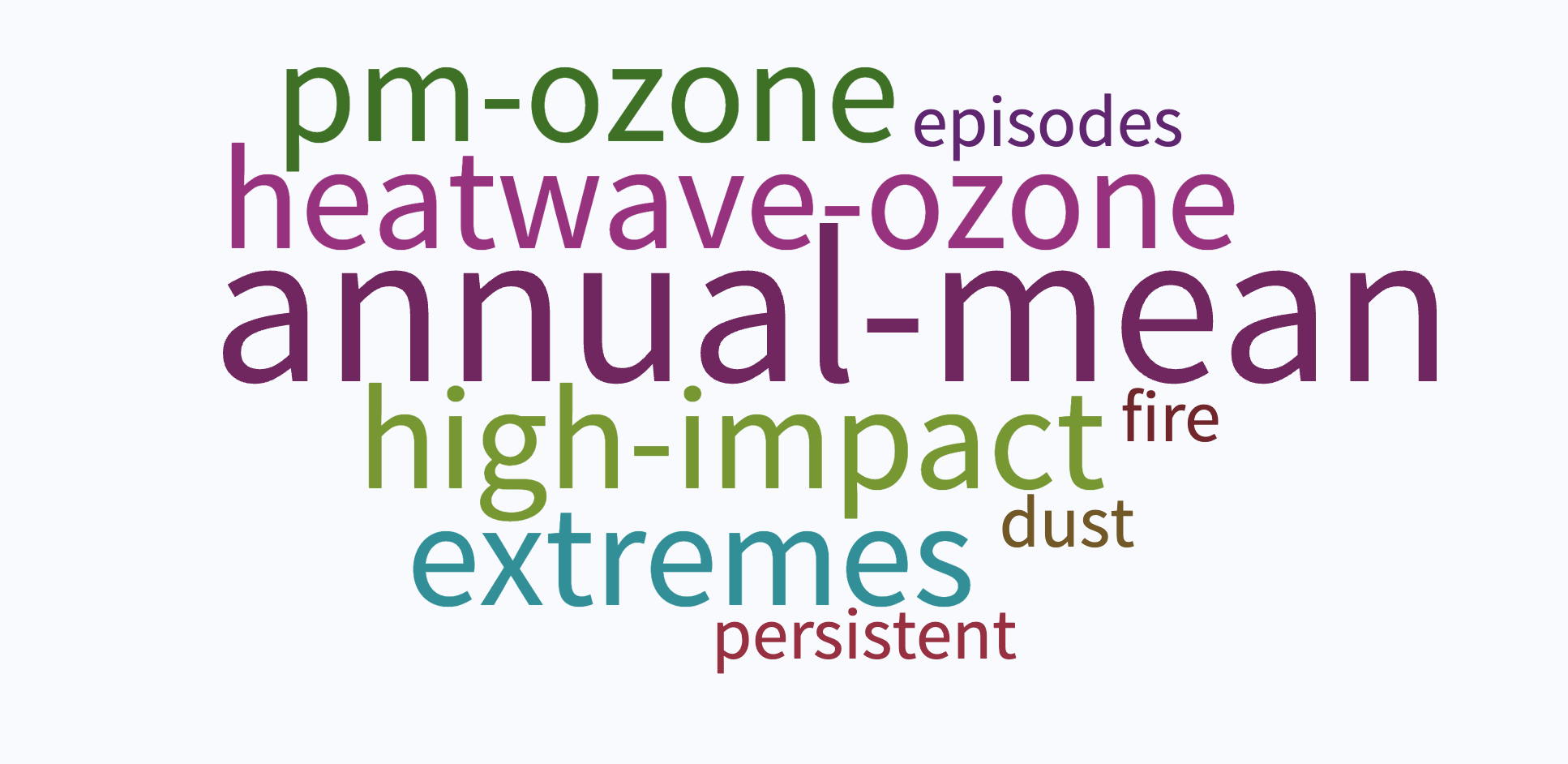
Major air quality challenges facing China. Credit: Ke Li.
Of particular urgency is the need to analyze current atmospheric environment changes that would offer timely scientific support for control strategies. Moreover, in addition to the changes of mean fine particulate (PM2.5) and ozone (O3) levels in 2025, high-impact air-pollutant events and compound events should also be highlighted.
A research group led by Prof. Hong Liao from Nanjing University of Information Science and Technology has provided a comprehensive assessment of China’s atmospheric environment for the year 2025. Their results show that, compared with the 2022–2024 average, the national mean PM2.5 concentration decreased by about 1 μg m?3 in 2025, and MDA8 (daily maximum 8-hour average) O3 concentrations declined by 3.4 μg m?3. These findings have been recently published in Atmospheric and Oceanic Science Letters.
“Although there is a continuous improvement in China’s air quality in 2025, we should also pay attention to high-impact air pollution events, such as severe pollution episodes, dust storms, wildfires, and compound pollution events”, says Prof. Hong Liao, corresponding author of the study.
The team’s results demonstrate that 28 cities in northern China experienced 5–8 days of severe PM2.5 pollution events, while there were only 6 cities with severe O3 pollution events. In addition, three major dust episodes were identified in 2025, in which a dust storm that occurred in April became the most spatially extensive dust event observed in China over the past decade.
“But, national wildfire-related PM2.5 in 2025 reached its lowest level in the past 20 years, with elevated fire activities still observed in central and southern northeastern China”, adds Prof. Liao.
The authors also examined compound pollution events, including PM2.5–O3 co-pollution, and compound heatwave–O3 events. The national average number of PM2.5–O3 co-pollution days was 1.7 in 2025, which is lower than the 2022–2024 average of 2.3 days. However, statistically significant increasing trends in compound heatwave–O3 events were detected across most regions of China over the past decade.
“Despite substantial improvements in air quality, extreme pollution events and compound air pollution remain major scientific and policy challenges. This calls for further research into the chemical and physical mechanisms driving these high-impact events to support more effective air pollution controls in the future,” concludes Prof. Liao.
Citation: Ke Li, Hong Liao*, Yang Yang, Jiandong Li, Xu Yue, Chenguang Tian, Xipeng Jin, Lei Chen, Pinya Wang, 2026. State of China’s atmospheric environment in 2025. Atmospheric and Oceanic Science Letters, https://doi.org/10.1016/j.aosl.2026.100835.
|







 Editor's choices & News